Alf Layla wa Layla
-
![]()
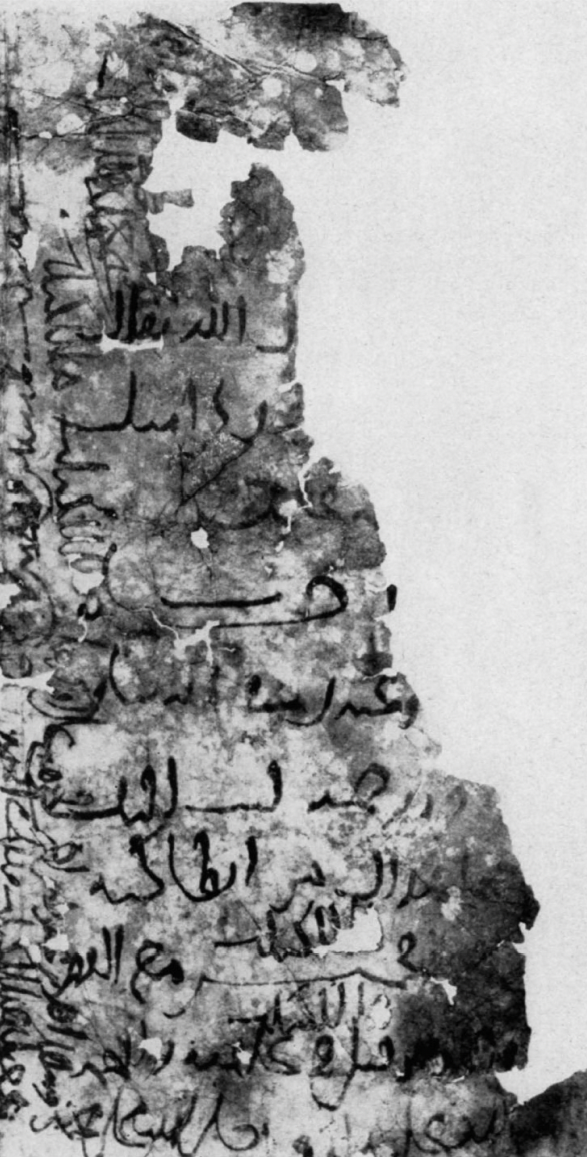
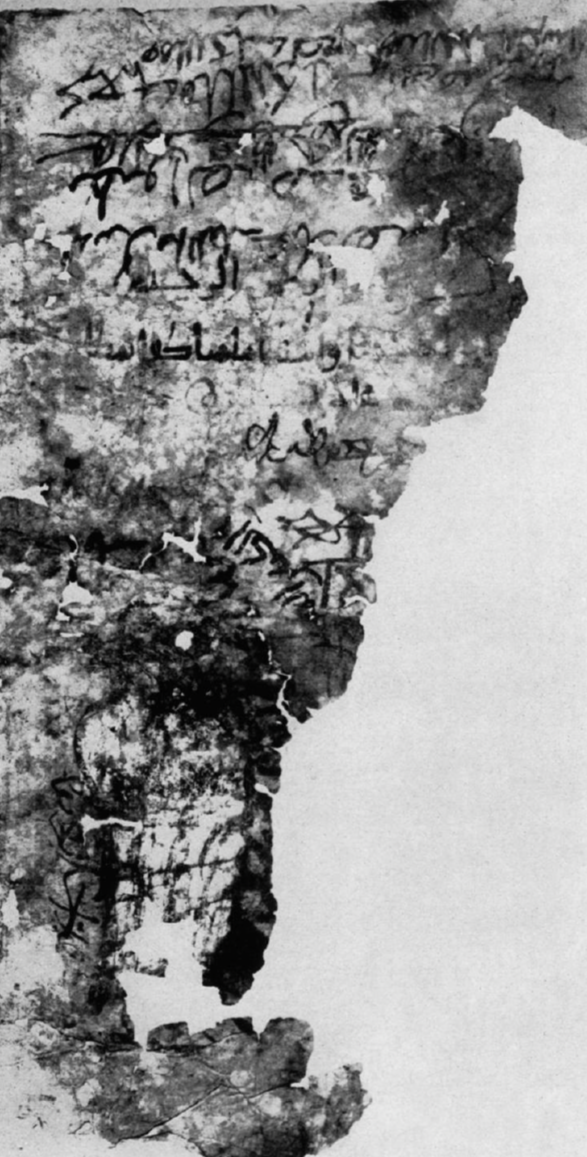
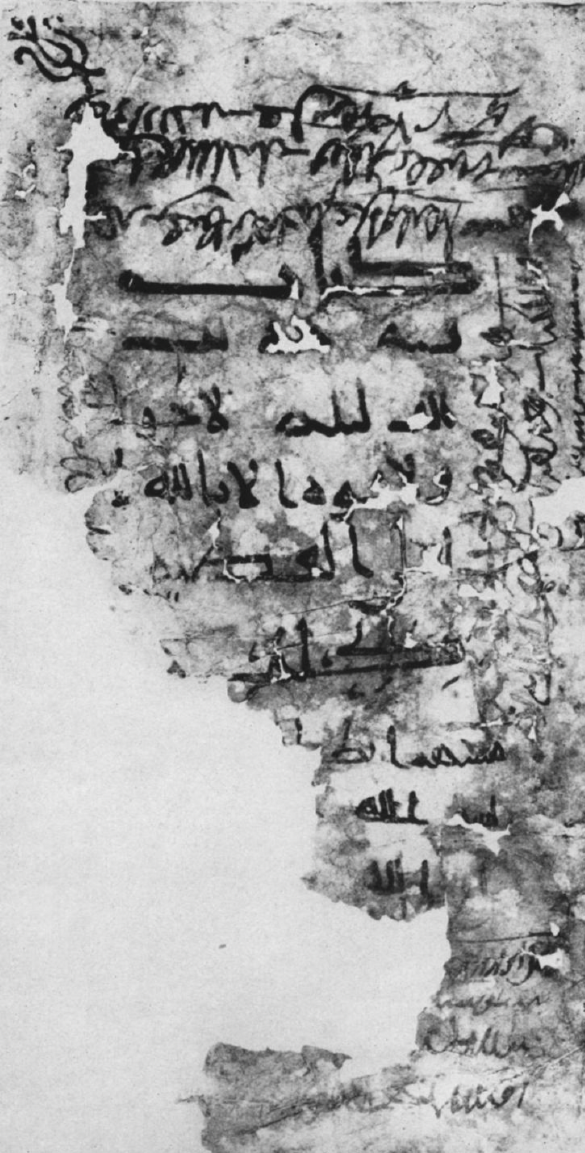
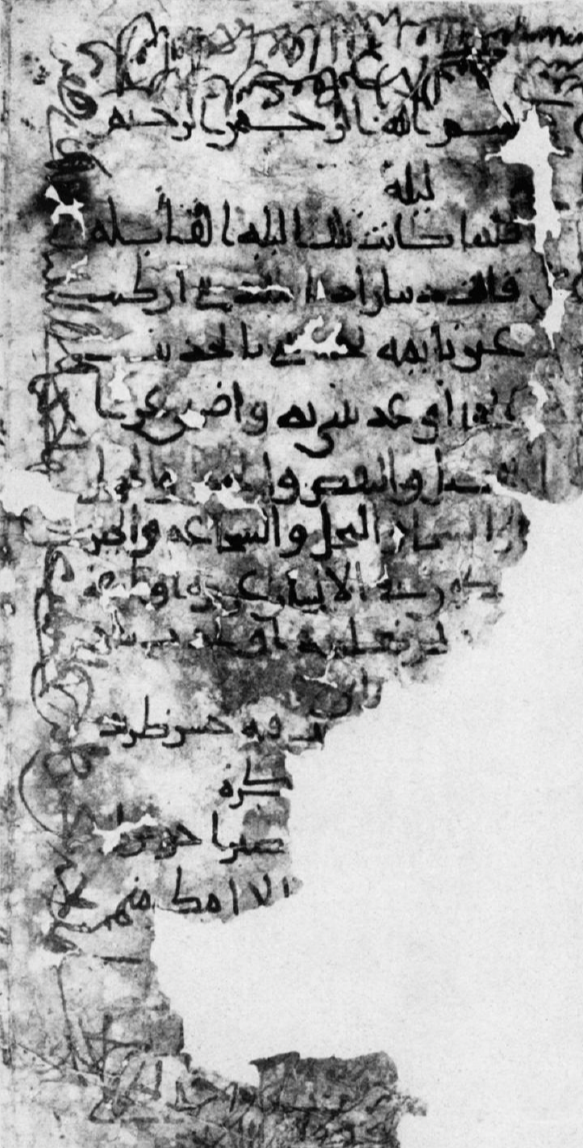
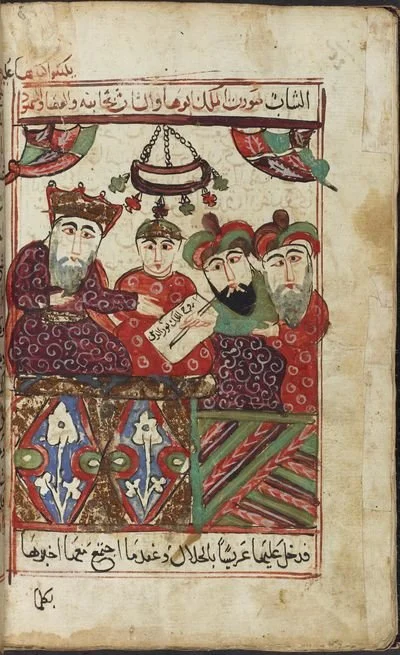
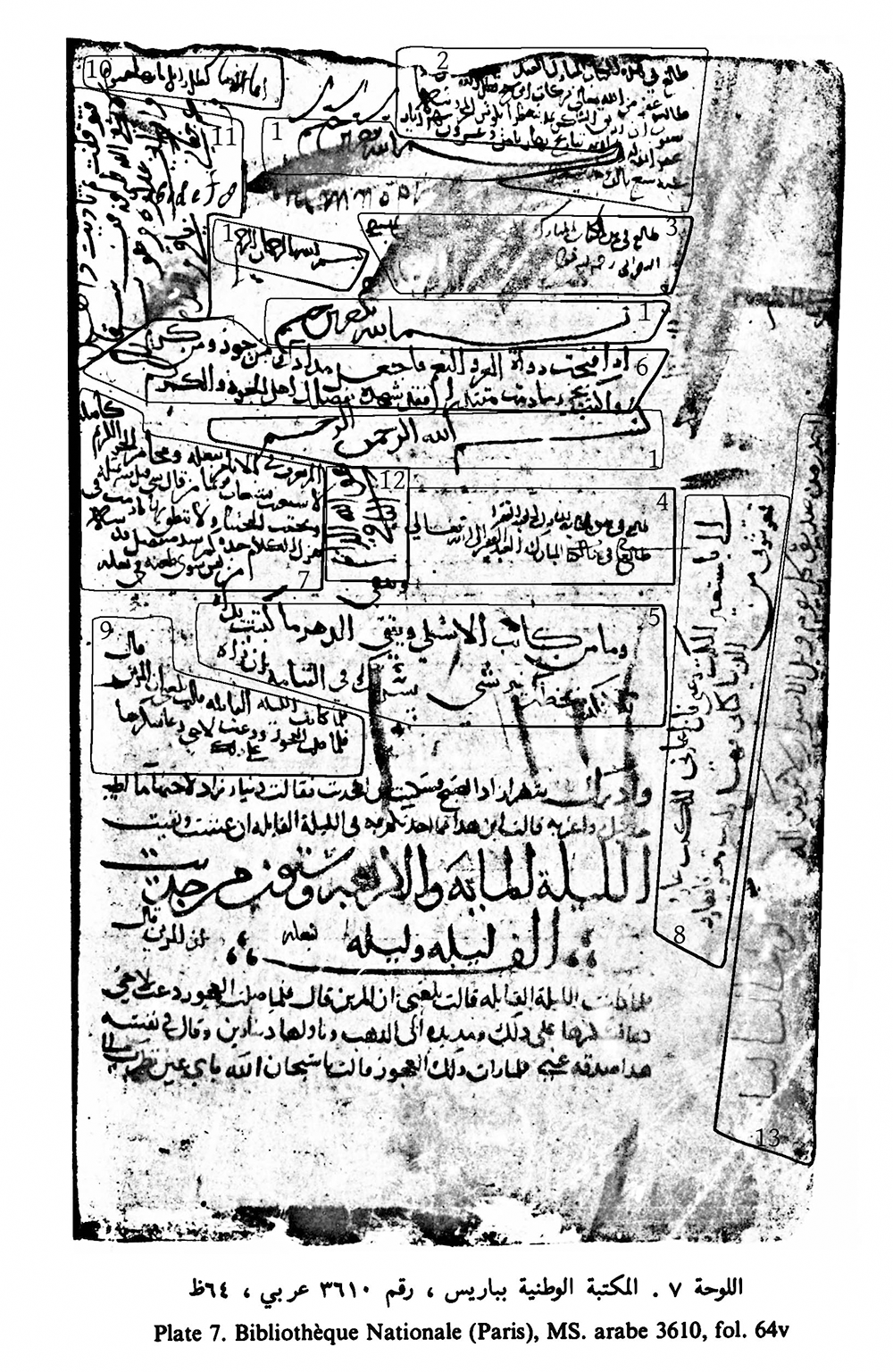
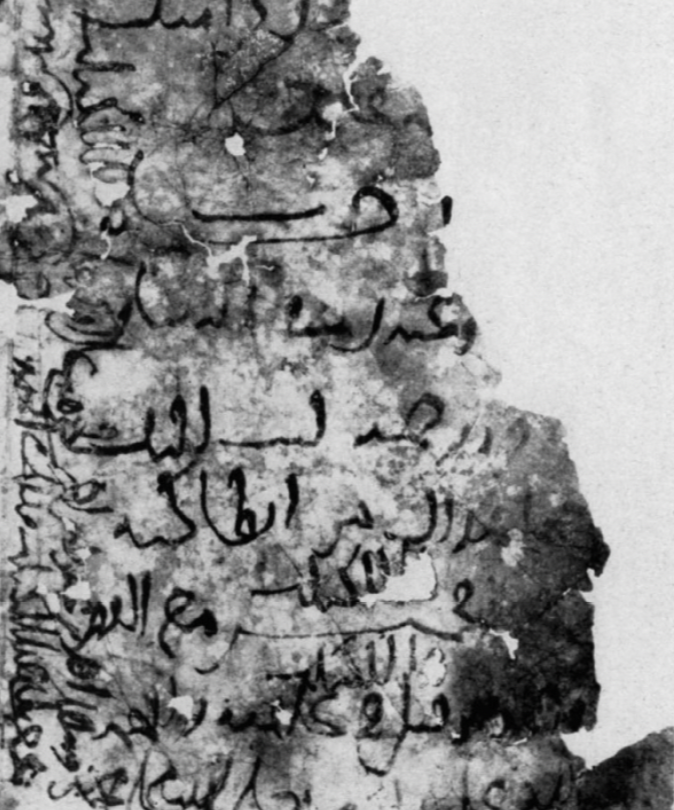
The earliest evidence of Alf Layla wa Layla available to this day is a 9th century palimpsest studied by palaeontologist Nabia Abbott, a paper fragment whose analysis helps us fathom the undocumented history of Alf Layla wa Layla. The paper fragment consists of two joined folios of fine brown paper written and overwritten across time by different hands. The most recent entry reveals an 879 CE formula for a legal testimony.
-
![]()
Other layers show: the rough draft of a letter, scattered sentences jutted down in several handwritings, the figure of a man drawn in a sitting position, later energetically rubbed off. Finally, the last layer reveals the first pages of a book entitled The One Thousand Nights, one of the early titles of the story collection. The last layer is in fact the first. It was done when the paper was still new and valuable, before it became draft material.
-
![]()
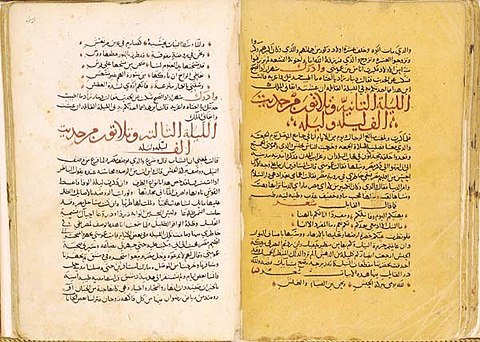
Abbott’s thorough analysis revealed that the document originated in Syria around 815 CE and belonged to a story collection titled A Thousand Nights -ancestor to The One Thousand and One Nights. Chances are it was brought to Cairo from Antioch by Ahmad Ibn Tulun during his conquest of Egypt. It is not only one of the first paper books in the Arab World but probably the first secular book in the Islamic World.
-
![]()
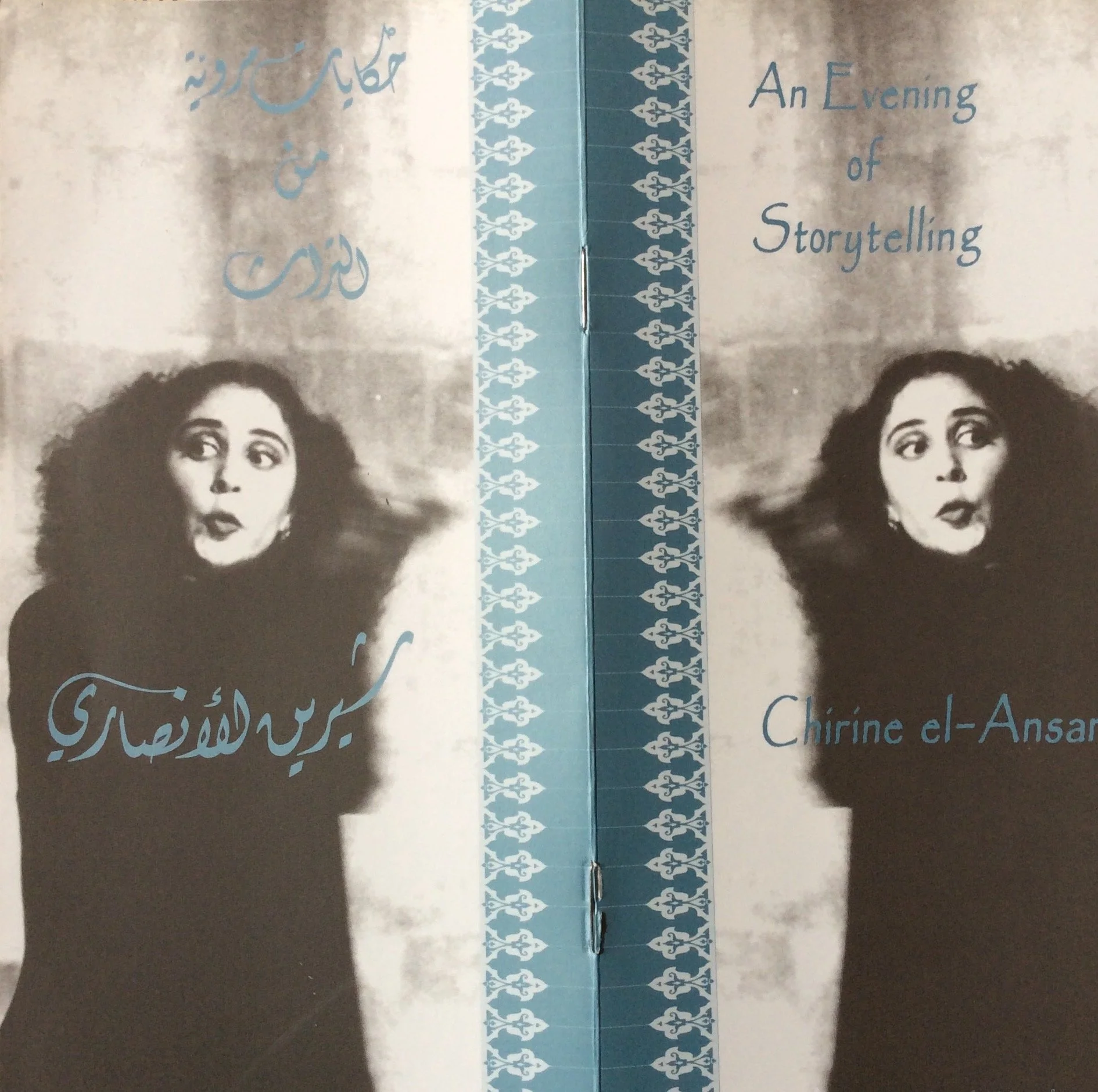
Rewriting, adapting and performing cycles of stories from Alf Layla wa Layla since 1995 is Chirine El Ansary’s way of exploring the invisible manifestations of The One Thousand and One Nights, and the powerful societal function they held. Performing reveals the book within. The book beyond the book.
-
![]()
The One Thousand and One Nights are known to be a collection of Middle Eastern stories structured around one framing story: Princess Scheherazade saves her life by telling Sultan Shahrayiar stories she does not end.
-
![]()
As the sun rises Scheherazade interrupts her tale. Left in suspense, eager to hear the end, the Sultan, notoriously a mass deflowerer-mass murderer, has no choice but to put off her death.
-
![]()
The One Thousand and One Nights were first translated from Arabic in 1704 by Antoine Galland, antiquary of the king of France. This translation triggered great interest and many more translations, as well as adaptations.
-
![]()
Manuscripts were searched for, stories were collected, translated, formatted, different versions were published. The One Thousand and One Nights acquired a shape: the shape of an object-book.
-
![]()
They could be held, owned, studied; they fell into the prisms of experts; consequently they were inevitably framed by orientalism and the conflicting claims the field ignited.
-
![]()
In Arabic The One Thousand and One Nights are called Alf Layla wa Layla.
-
![]()
So what could Alf Layla wa Layla have been before they were collected, translated, published? Is it still possible to sense their existence beyond the boundaries of their published manifestations and the discourses that traps them? Did the printed incarnations of Alf Layla Wa Layla overshadow their ethereal oral-performative counterpart? What could their intrinsic nature be?
-
![]()
A journey through the liminal and somehow invisible nature of Al Layla Wa Layla that started in 1994. The narratives are reimagined to address universal dreams and questions of contemporary relevance. Audiences navigate between past, present, and future as time and space collapse, forging an alternative reality. Here, stories unfold leading them to revisit what they had taken for granted.