The Heart of A Hero
-
![Black and white photo of a woman with curly hair looking to the side, with a blurred background of lamps and a table.]()
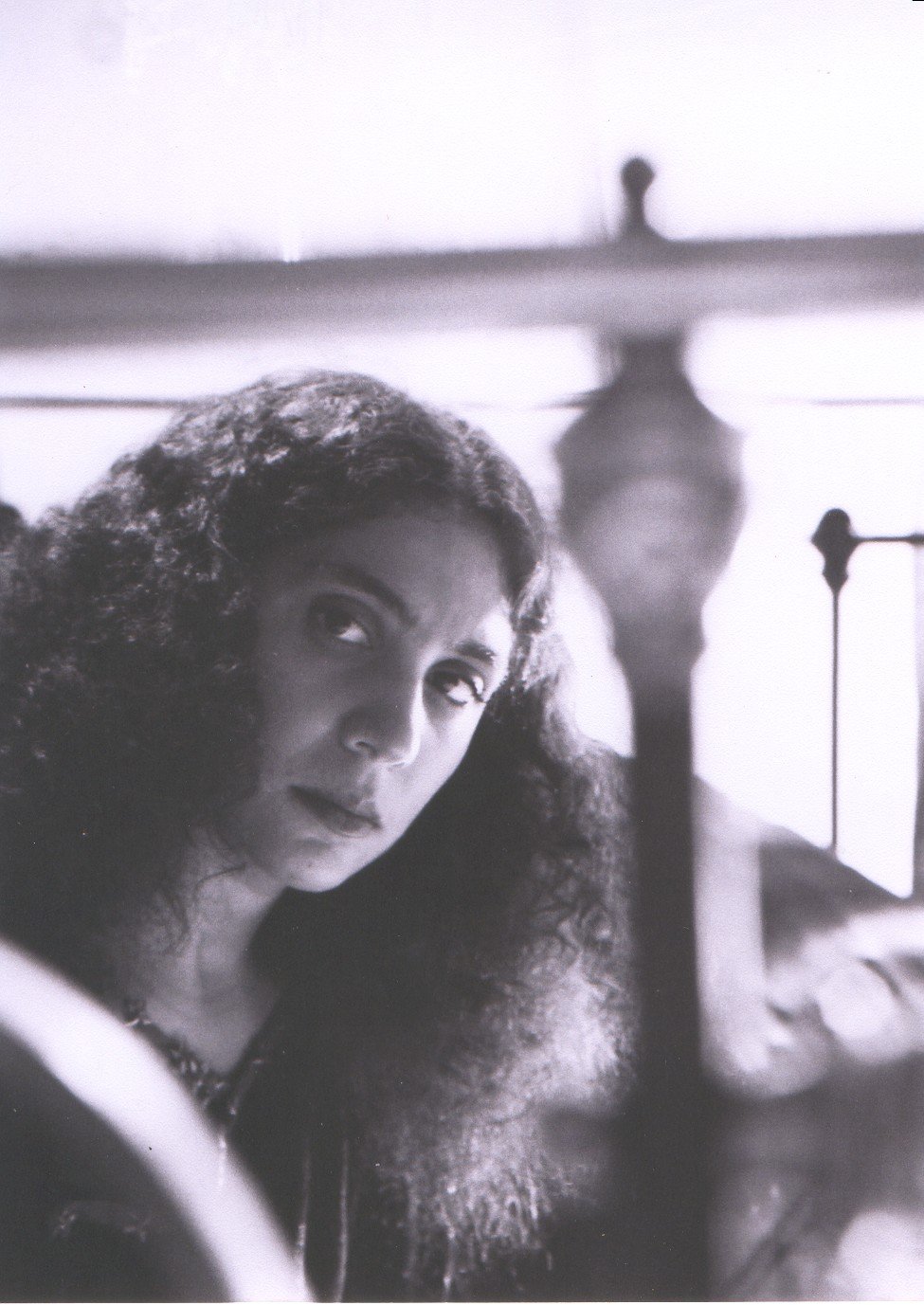
As a young adult in Cairo, Chirine El Ansary discovered al-Sīrah al-Hilāleyyah through the work of Abdel Rahman al-Abnudi, Sheikh Sayyed al-Dawi, and the Warsha Theatre Group. It soon became clear to her that as an Egyptian storyteller and performer, she could not ignore this vast and living part of Egyptian collective imagination. The deeper she delved into it, the more she fell under its spell. In 2003, El Ansary began exploring ways to retell parts of the Sīrah in her own voice — and in the three languages that shape her expression: Egyptian Arabic, English, and French.
-
![Woman with curly hair wearing a black dress with straps, standing on stage with arms raised and a serious expression.]()
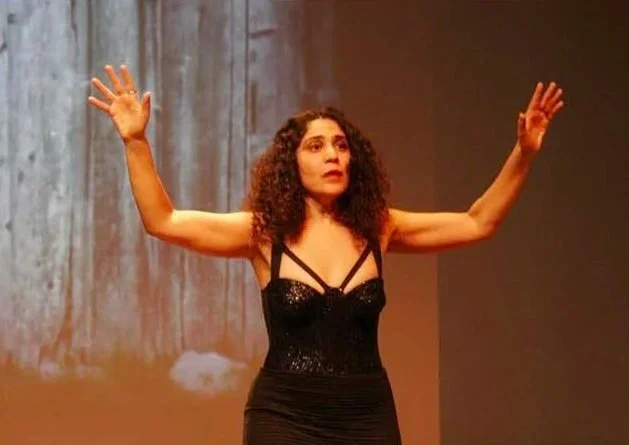
Through improvisations and rehearsals, she started reimagining its narratives from her own perspective, tracing how they echoed within her over the years — first as a young listener, then as a woman and performer. This journey led to The Heart of a Hero, her adaptation of selected episodes from the epic, which premiered at the Barbican, London, in spring 2005. The performance delves into the emotions and contradictions of the hero, Abu Zeid al-Hilali — a warrior who loves his enemies, and is also a poet and a musician.
-
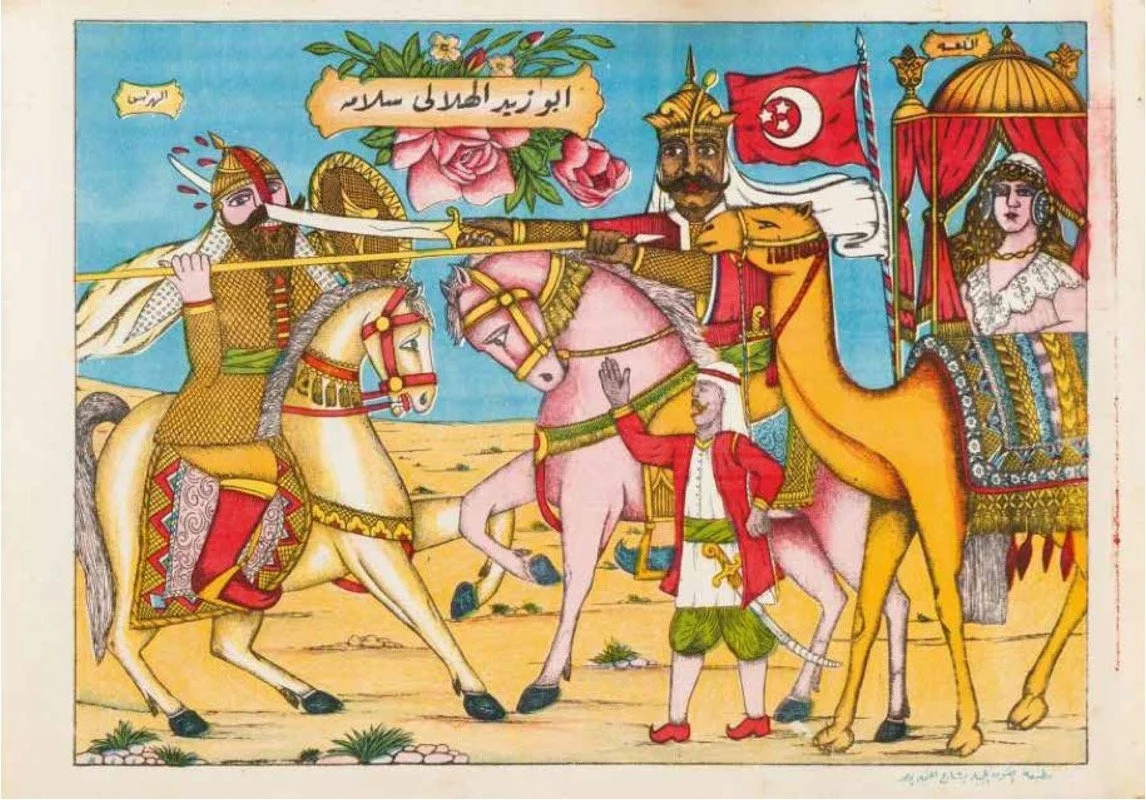
![An illustrated historical scene depicting two armed men on horseback with cloaks, pointing swords at each other, with a standing man in traditional clothing between them. The background shows desert landscape, a banner with a Tunisian flag, a woman inside a decorative canopy, and floral decorations and Arabic text at the top.]()
The Hilali Epic — al-Sīrah al-Hilāleyyah — is an oral poem recounting the migration of the Banī Hilāl Bedouin tribe from the Arabian Peninsula to North Africa in the 10th century. Once widespread across the Middle East, it now survives mainly in Egypt and remains the only Arabic epic still performed with its full musical form.
Performers train from childhood through long apprenticeships, mastering memory, music, and storytelling. They learn to insert improvised commentary to make the ancient tales relevant to their audiences.
-
![A group of men sitting and conversing outdoors in front of a shop with tiled walls and Arabic writing.]()
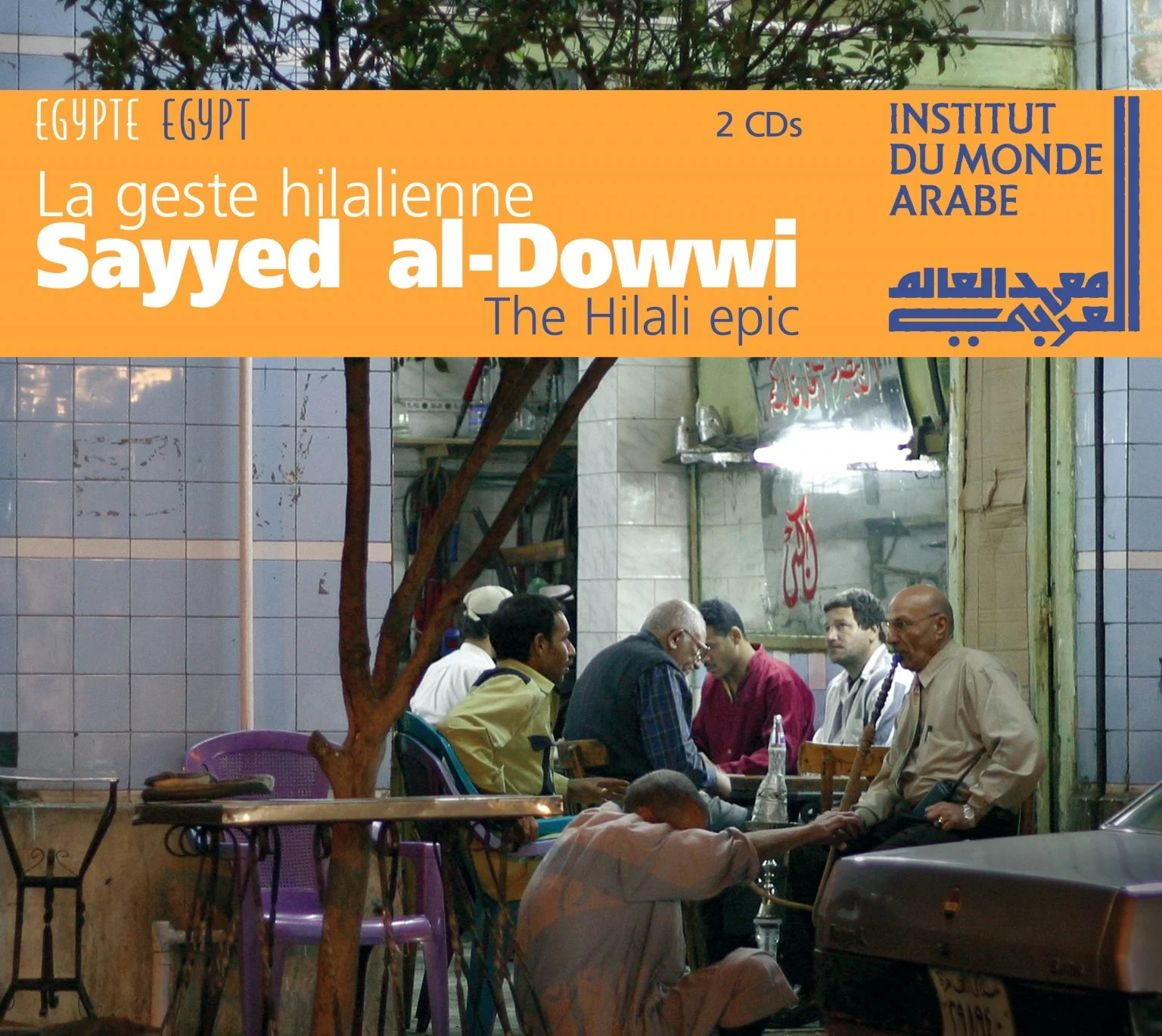
Sheikh Sayyed al-Dowwi, born in 1934 in Qûs, Upper Egypt, was a master performer of the sīra sha‘biyya (popular epic). Trained by his father, Hajji al-Dowwi, he learned the art through accompanying him at public and private gatherings. Al-Dowwi’s poetry drew vivid imagery from everyday village life and was performed in the rural dialect of Upper Egypt.
-
![Two men sitting and talking into microphones, one holding a paper, with two women in the background.]()
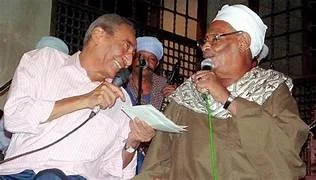
‘Abd al-Rahman al-Abnudi (1938–2015) was a celebrated Egyptian poet from Upper Egypt, known for bringing the language and spirit of the countryside into modern Arabic poetry. Deeply interested in Egypt’s oral traditions, he devoted years to collecting and recording the Sīrat Banī Hilāl. Through extensive fieldwork with storytellers and poets he preserved and published large portions of the Hilali epic, blending scholarly documentation with poetic sensitivity.
-
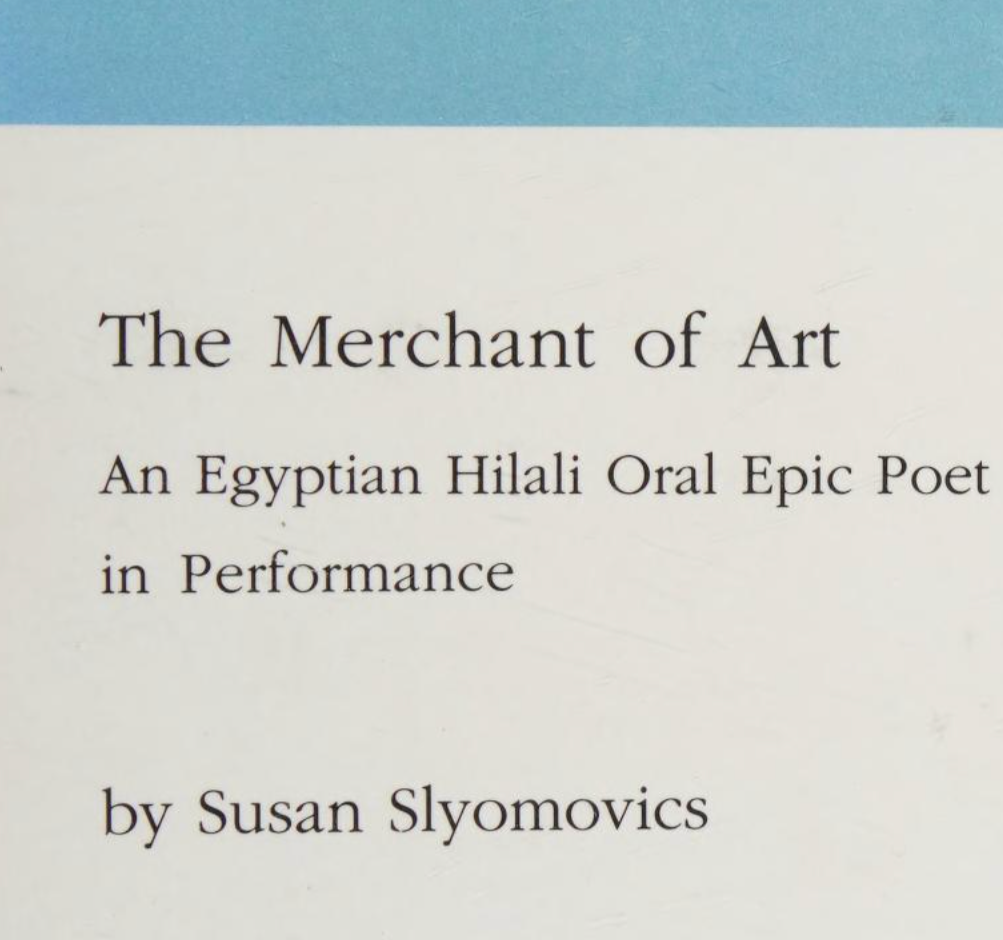
![Close-up of a book cover titled "The Merchant of Art: An Egyptian Hilali Oral Epic Poet in Performance" by Susan Slyomovics.]()
Anthropologist and folklorist Susan Slyomovics played a key role in bringing international attention to the Sīrat Banī Hilāl through her discovery and documentation of living Hilali poets in Egypt in the 1980s. Her fieldwork, particularly with performer Awadallah Abd al-Jalil, revealed the richness and complexity of this oral epic as a living art form. Slyomovics highlighted how poets adapted ancient tales to contemporary village life, preserving communal memory while continually renewing the tradition.